
Why Automatic Feeders Jam — and How We Design Against It
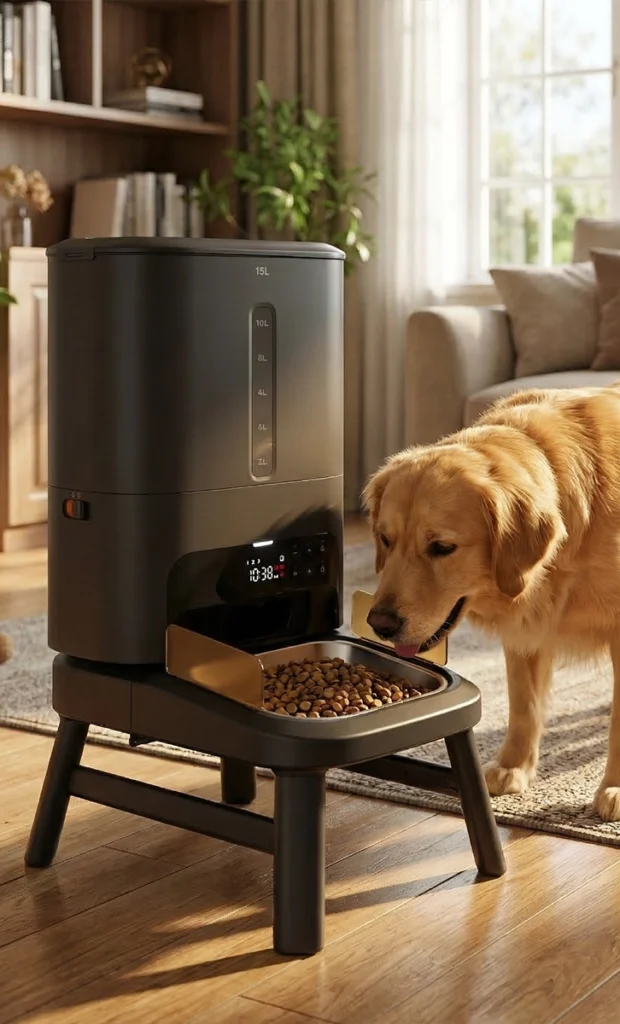
Of all the complaints that land on an automatic feeder listing, jamming is the one that hurts most — because a jam means a pet did not get fed, and an owner who comes home to that does not give a second chance. Buyers often assume jamming is bad luck or bad kibble. It is mostly an engineering outcome, decided long before the product ships. As a factory, here is what actually causes feeders to jam and how we design dispensing to stay reliable across the kibble shapes real households use.
The three real causes of a jam
Most jams trace back to one of three things. The first is kibble bridging, where pieces arch over the outlet and stop flowing — a hopper with the wrong wall angle makes this far more likely. The second is the dispensing mechanism itself: a poorly chosen auger or rotor can crush, wedge or skip large or irregular kibble. The third is kibble-size mismatch, where a unit tuned for small pellets chokes on the chunky kibble many dog owners buy. A feeder that works perfectly in a factory test with one bag can still jam in the field on a different shape, which is why the design has to account for a range, not a single sample.
How dispensing is designed against it
Designing against jams is about geometry and tolerance. The hopper walls are angled to keep kibble moving toward the outlet, the dispensing mechanism is sized for a stated kibble range, and the motor has enough headroom to clear a momentary obstruction rather than stalling against it. We validate our feeders across several kibble shapes and sizes during development, because the goal is reliable portions in a real home, not a clean number on a spec sheet. This is also where in-house engineering matters — with structure, electronics and firmware in one team, the dispensing fix and the firmware that drives the motor are solved together rather than passed between vendors.
What buyers should specify and verify
If you are sourcing a feeder, state the kibble range your market actually uses and ask the factory to confirm the dispensing is validated for it — especially for dog-focused SKUs with larger kibble. Run your own jam test on a sample with the kibble your customers buy before you scale an order. Our feeders are built to CE, FCC and RoHS standards with test reports on request, and on ODM projects we tune the hopper and dispensing for your target kibble rather than just restyling the shell. Our feeder line runs around 45,000 units a month, so reorders move on the same schedule as the first run. Send us your target kibble and volume and we will quote a configuration built to stay unjammed.
Need a factory quote or a private-label plan?
Tell us your category, quantity and target market and we'll reply within one working day with MOQ, pricing and lead time.